
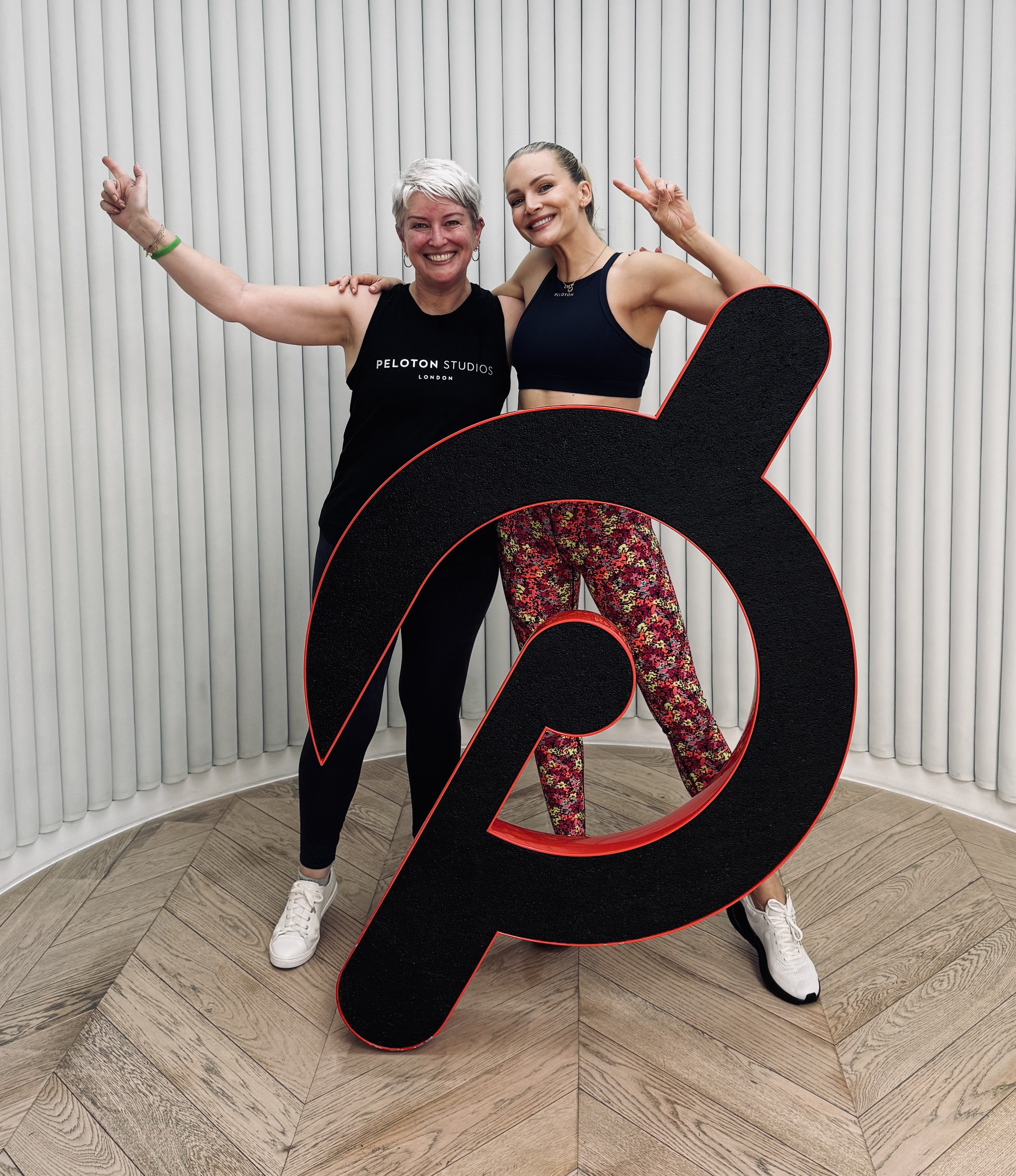
On Sunday morning, I stood in a queue outside Peloton’s London studio alongside a woman who had flown from Washington State just to take a class with her favourite instructor.
She’d never been to London before. She’d come for the weekend and was flying home on Monday.
As I listened to the conversations around me, hers was far from the only American accent. Others had also travelled specifically to take classes, or worked a studio visit into a business trip or holiday. According to those in the queue, getting a place in London was easier than at Peloton’s New York studio.
That’s quite a level of commitment to an exercise class.
Although, looking at my own history, perhaps I shouldn’t be surprised.
I’ve had a Peloton bike since 2016 and am coming up to 2,800 spin classes. More recently, I’ve shifted towards the strength content, clocking up over 900 classes there too.
My current streak is 482 consecutive weeks of completing at least one workout. It’s the longest commitment I’ve ever made to any single form of exercise.
Standing in that queue got me thinking about what businesses can learn from a brand that inspires that kind of connection.
A room full of enthusiastic customers doesn’t tell you everything about a company’s commercial performance. But people crossing an ocean to exercise with someone they usually see on a screen is a powerful demonstration of what that relationship can become.
Three things stood out to me.
1. People create the connection.
The woman from Washington State had come to see her favourite instructor. The person delivering the experience mattered enough to shape her travel plans.
In our own businesses, how much attention do we give to the people our customers interact with? Their ability to build trust and connection deserves as much consideration as the product or service itself.
2. Progress gives people a reason to return.
My class counts and weekly streak make years of effort visible. There’s something satisfying about seeing that commitment build.
Where can we help our customers recognise their own progress? Depending on the business, that might mean acknowledging a milestone, showing what’s improved or simply taking the time to point out how far they’ve come.
3. The experience can become part of someone’s life.
For me, Peloton has been part of my routine for years. For the people in that queue, a studio class was also something worth planning a trip around and creating a memory from.
That’s a useful prompt to think beyond the transaction. What makes customers look forward to interacting with your business? What will they remember afterwards?
These are questions worth asking as we build and scale. The experience we create, and the people delivering it, need to grow with us.
Most of us won’t have customers booking international flights to visit. But we can all ask:
What are we doing that gives our customers a reason to keep coming back, and to tell someone else about us?




Responses