
Last Friday night I had the great privilege of attending the opening of the Jim Henson Company exhibition at GOMA in Brisbane.
It’s the first time an exhibition of this magnitude has been staged outside the US, and as the crowd waited for the formalities to be over and the doors to open, there was a tangible buzz of excitement in the air.
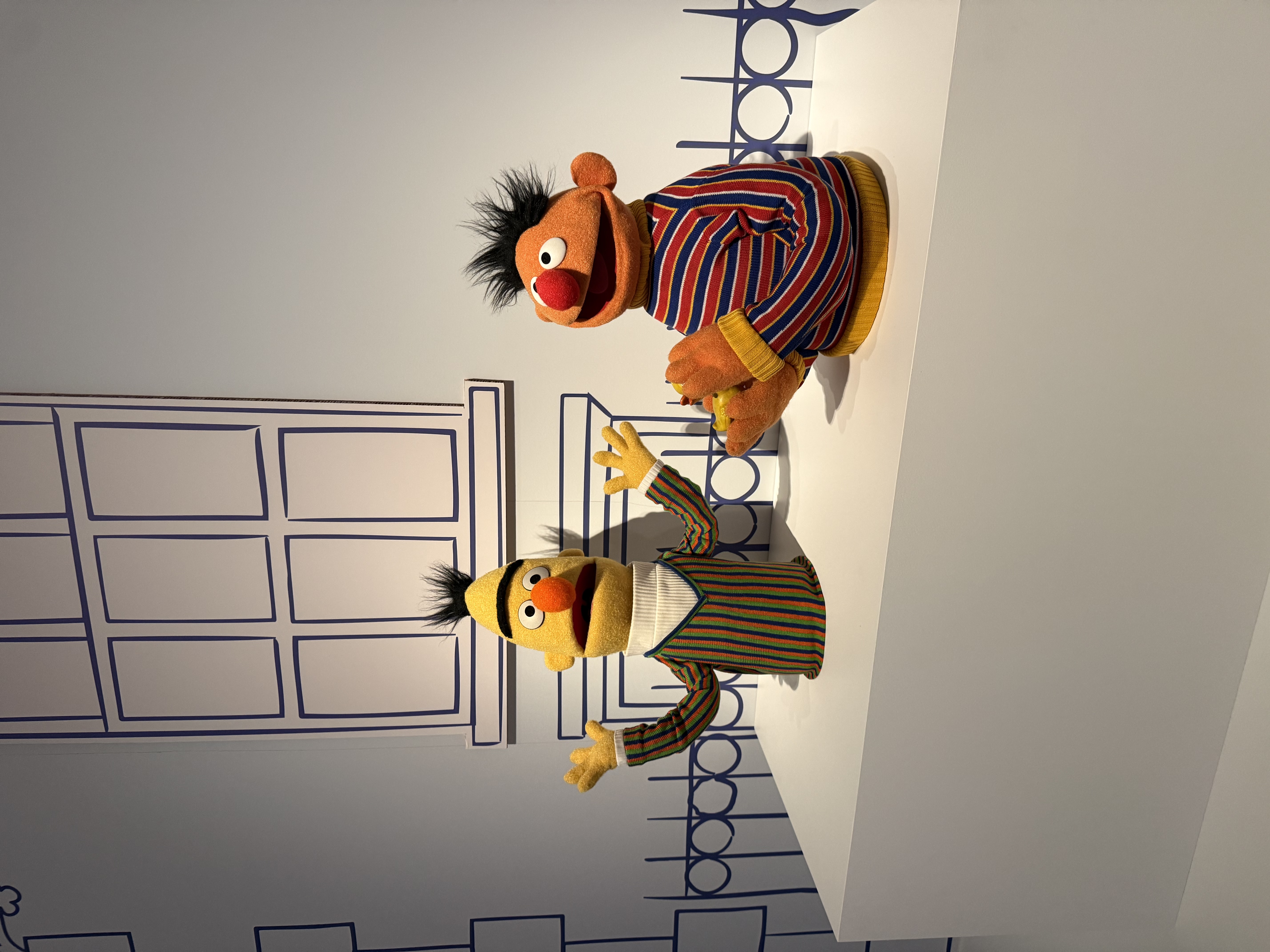
Everyone was sharing memories of their favourite shows and the characters who had played such an immense role in their childhoods. For me, it was all about Sesame Street and the Muppets, but there were just as many people equally passionate about Fraggle Rock and The Dark Crystal.
The word I kept hearing over and over was joy.
And it got me thinking.
There is enormous power in nostalgia - in tapping into memories of times that felt simpler. Whether they actually were simpler is another question. Our memories have a wonderful way of softening the focus around some of the challenges!
The merch shop was humming as people took those freshly reinvigorated memories and turned them into something tangible they could take home with them.
And yes, I absolutely joined them.
But what really stayed with me was what this might tell us about some of the broader shifts happening around us.
As AI continues to accelerate the pace of change and more of our lives become digitally enabled, I think we're going to place an increasing premium on the things that feel distinctly human.
Joy. Shared experiences. Nostalgia. Face-to-face connection. A sense of belonging.
That doesn't mean resisting technology, in fact quite the opposite. I'm a huge believer in embracing innovation and continually looking for better ways to do things.
But great leaders also need to pay attention to what might become more valuable because of that change.
That's one of the things I find fascinating about spotting opportunity. We naturally focus on the obvious question: What will new technology allow us to do?
But there's another question worth asking:
What will people value more as a consequence of that technology becoming ubiquitous?
Maybe it will be experiences that can't be replicated by an algorithm. Maybe it will be genuine human connection. Maybe it will be brands that make us feel something, or physical spaces that bring people together. And maybe nostalgia becomes increasingly powerful because it gives us an emotional connection to a world that felt less complicated.
For leaders and business owners, these aren't just interesting social observations. They're signals.
So as you think about your own strategy, customer experience and growth plans, ask yourself:
What are the distinctly human things your customers value — and are you protecting and strengthening them as you embrace everything technology makes possible?
Sometimes spotting the next opportunity isn't about predicting what's coming.
It's about noticing what's already changing around you.




Responses